01 · The stories
Myths & defining acts
Bears Apollo and Artemis (Hesiod, Theogony 918–920; Homeric Hymn to Apollo); Latona's story of the Lycian peasants is told in Ovid (Metamorphoses 6.313ff); Niobe's children are killed by Apollo and Artemis (Apollodorus 3.5.6).
02 · Sacred lineage
Family & relations
In Hesiod, Phoebe, joined with Coeus, bears Leto (Theogony 404–406); Leto, with Zeus, bears Apollo and Artemis (Theogony 918–920).
Greek literary genealogies and Roman cult identities are not interchangeable. Explore the family tree and its traditions.
03 · Places of devotion
Abode & sacred sites
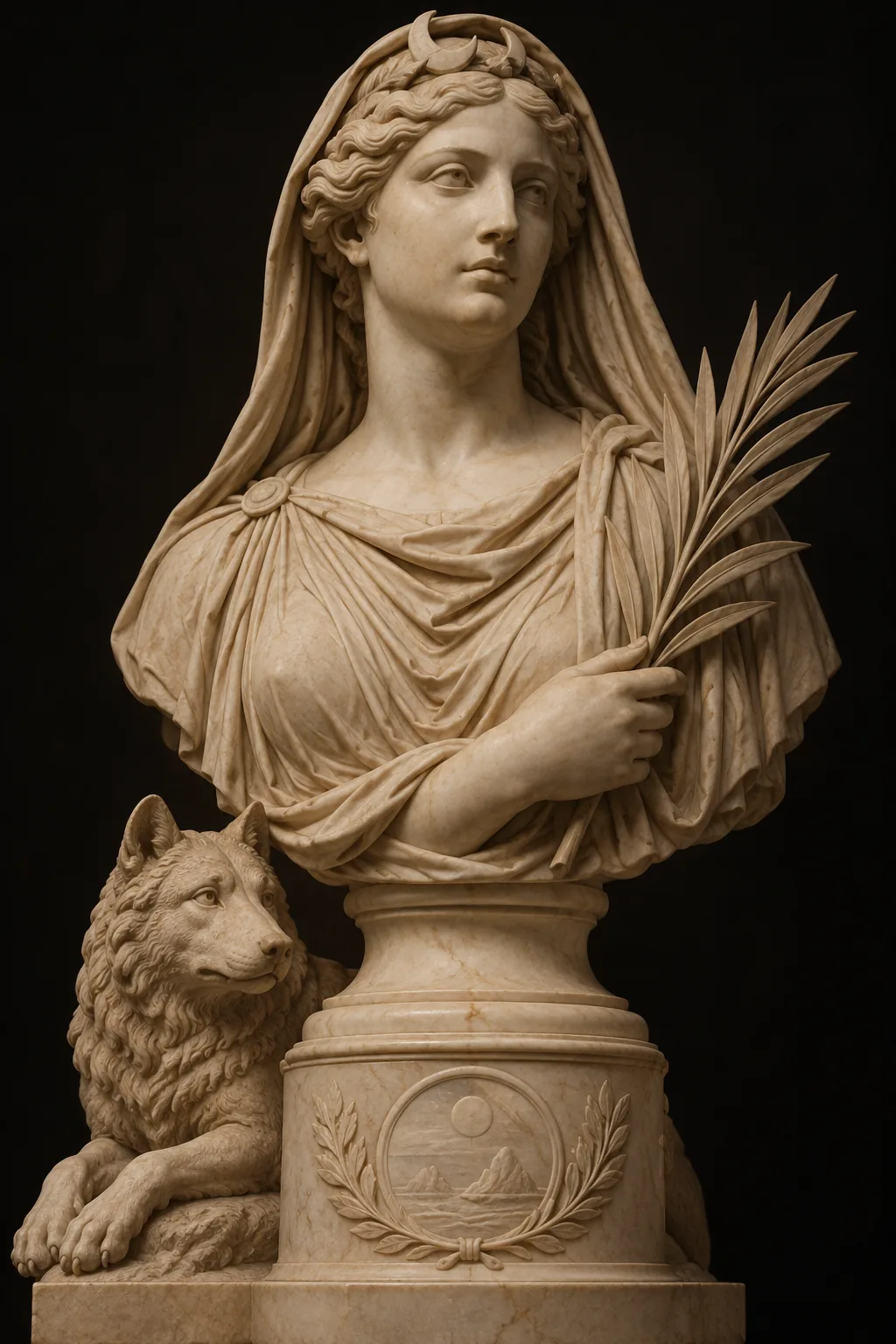
Delos, where in the Homeric Hymn to Apollo she bears Apollo beside a palm tree (3.14–18).
04 · Two traditions
Greek & Roman perspectives
The Greek perspective
In the Homeric Hymn to Apollo, Leto bears Apollo on rocky Delos, near a palm tree by the streams of Inopus, and Artemis in Ortygia (3.14–18).
The Roman perspective
In Ovid, Latona appears in a tale of Lycian peasants who scorned the goddess (Metamorphoses 6.313ff).
05 · Extensive analysis
A closer reading
Hesiod makes Leto a gentle goddess and the mother of Apollo and Artemis, and the Homeric Hymn to Apollo gives the birth on Delos. Ovid tells a Roman tale of Latona and the Lycian peasants.
06 · Primary sources
What the sources say
These are the main ancient passages behind this entry, with what each one actually says.
- Hesiod, Theogony lines 404–406
Phoebe, joined with Coeus, bears dark-gowned Leto, always mild, kind to men and to the deathless gods.
Read the passage - Homeric Hymn, To Apollo (3) lines 14–18
Leto bears Apollo in rocky Delos, resting against the Cynthian hill by a palm tree, and Artemis in Ortygia.
Read the passage - Ovid, Metamorphoses book 6, lines 313–381 (Latin text)
After the story of Niobe, one of the men tells how the old peasants of Lycia scorned the goddess.
Read the passage - Apollodorus, Library book 3, chapter 5, section 6
Amphion marries Niobe, who bears seven sons and seven daughters, later killed by Apollo and Artemis.
Read the passage
07 · Story & deeper insight
Leto and the birth on Delos
Pregnant Leto searches for a place willing to receive her, but prospective hosts fear the consequences of accommodating a powerful new god. Delos finally agrees after securing a promise of honour. The birth of Apollo transforms an insecure island into an important sacred landscape. Divine vulnerability and future prestige are joined in the same episode.
The hymn's emphasis on negotiation prevents the setting from being mere scenery. Delos wants protection from neglect after helping Leto, while Leto needs acceptance before her child can arrive. A sanctuary's authority is explained through a relationship established in a moment of need.
Leto's story is a valuable counterpoint to myths of effortless divine command: even a goddess may face exclusion, delay and dependence on hospitality. The eventual birth makes welcome into an act with lasting religious consequences.