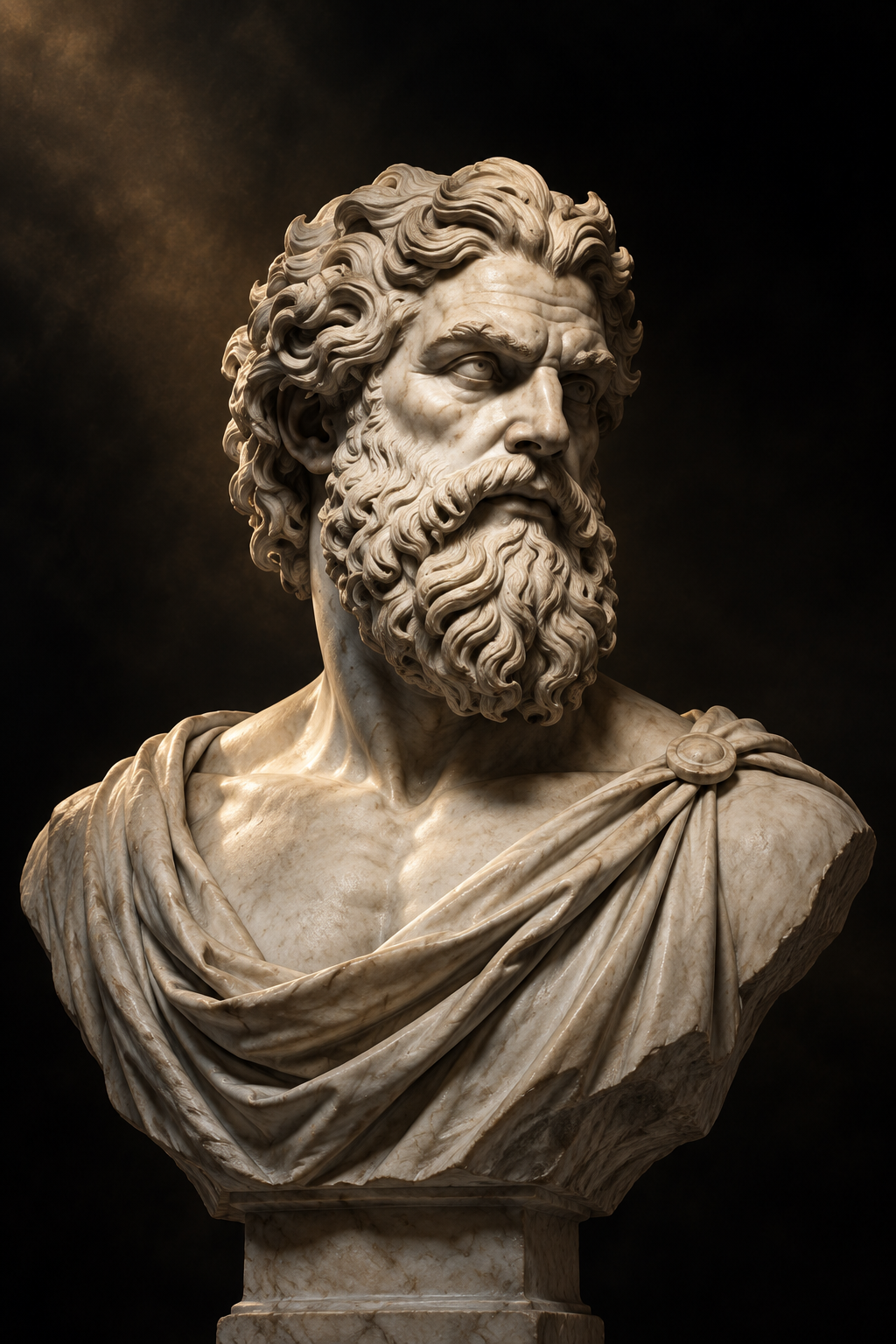
01 · The stories
Myths & defining acts
Produced Uranus, the mountains and the sea from herself; armed Cronus to castrate Uranus; later, angry that Zeus had jailed the Titans, brought forth the Giants and finally the monster Typhon to challenge him; warns each ruling god of the child destined to replace him.
02 · Sacred lineage
Family & relations
Emerged near the beginning from Chaos. Consort: Caelus (Uranus), then Pontus (Sea) and Tartarus. Mother of the Titans, Cyclopes, Hecatoncheires, Giants, the sea-gods and, via others, many monsters.
03 · Places of devotion
Abode & sacred sites
The Earth, everywhere.
04 · Two traditions
Greek & Roman perspectives
Gaia (Gaea)
Honoured with offerings poured directly onto the ground and called on to witness oaths; an ancient, ever-present power older than the Olympians who repeatedly sides with the next generation against the current ruler; a source of dreams and prophecy.
Terra (Tellus / Tellus Mater)
Worshipped as Tellus Mater, often beside Ceres; the Fordicidia (15 April) sacrificed pregnant cows to her for the fertility of fields and herds. On the Ara Pacis of Augustus she appears as a serene figure of peace and plenty, an emblem of the empire's abundance.
05 · Extensive analysis
A closer reading
Gaia is the oldest and most fundamental Greek divine figure, the solid ground out of which nearly all the gods ultimately come and which outlasts every dynasty that quarrels above her surface. She is less a character than a presence: the endlessly fertile earth. The Romans kept her as Tellus or Terra Mater, a calm, bountiful mother of the fields, and made her serene image an emblem of the peace and prosperity of the Augustan order.
06 · Sources
From the archive
Text from Gods · greek_roman_gods, row 20. Imported 10 September 2026.