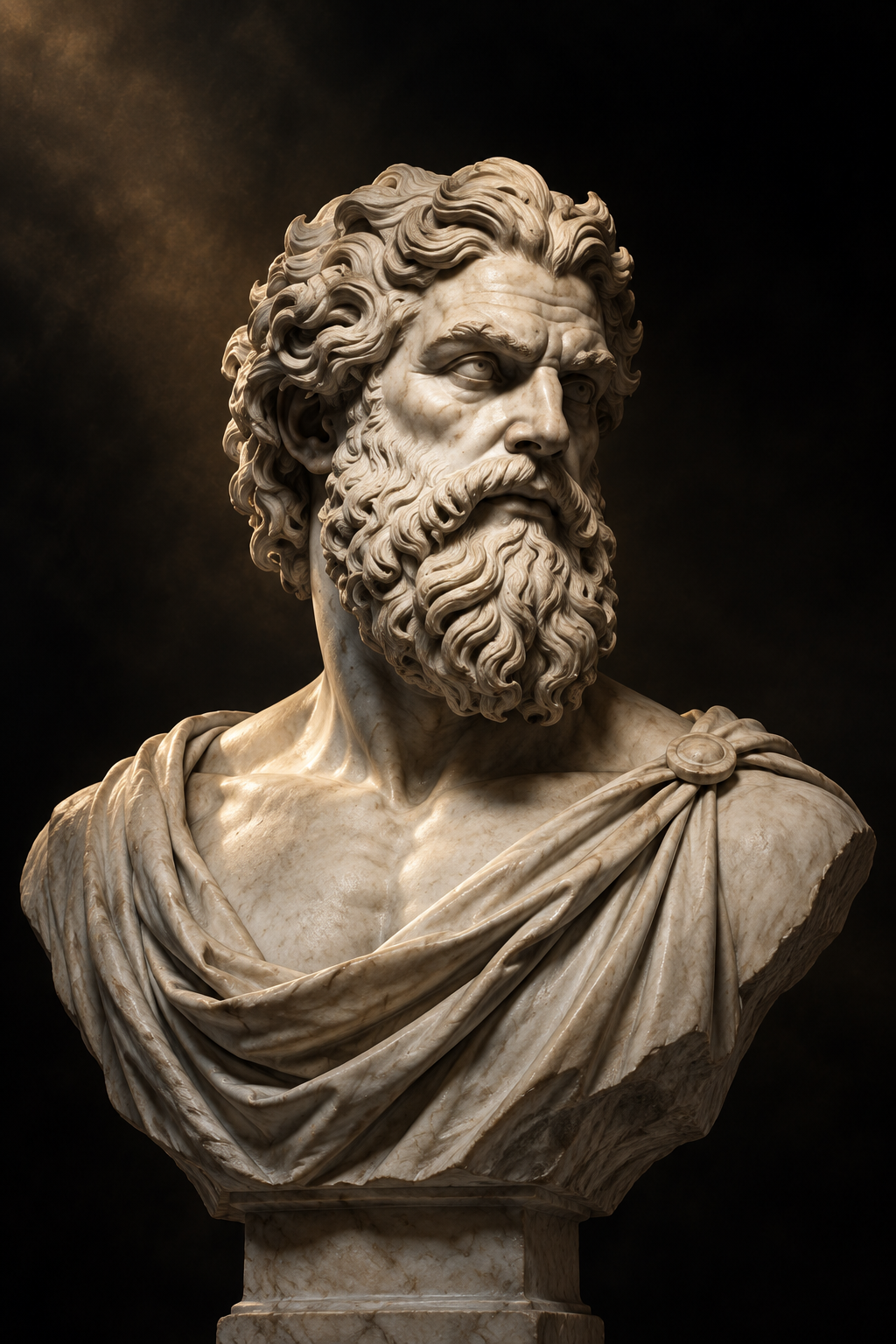
01 · The stories
Myths & defining acts
Little native narrative; the distinctively Roman element is ritual - the coming-of-age of young men at the Liberalia, and the rural phallus-processions in which the most honoured matron of a town garlanded the image to secure the crop.
02 · Sacred lineage
Family & relations
Liber ('the free one') and Libera, treated as consort or brother-and-sister; grouped with Ceres as their 'mother'. After identification: Liber = Bacchus, Libera = Ariadne or Proserpina.
03 · Places of devotion
Abode & sacred sites
The Aventine Hill in Rome, where their temple stood with that of Ceres; the vineyards and fields of Italy.
04 · Two traditions
Greek & Roman perspectives
Dionysus and Ariadne / Persephone (identified with)
No native Greek cult; the stories attached to them are those of Dionysus and his consort once the equation was made.
Bacchus's older self: Liber and Libera
Formed the plebeian Aventine Triad with Ceres from 493 BCE. At the Liberalia (17 March), boys laid aside the boy's toga and bulla for the plain adult toga and went to the Forum - a rite of entry into citizenship; old women sold honey-cakes (liba) as his priestesses; in the countryside a great phallus (fascinus) was carried in procession for the fertility of the seed and to avert the evil eye.
05 · Extensive analysis
A closer reading
Liber is a native Italian god of generation whose name simply means 'free', a sense that worked on several levels: the free flow of nature's fluids, release through wine, and the political liberty of the citizen, which is why his festival was the day young men formally became adults. Because his sphere overlapped so exactly with Dionysus, the two were identified early and Liber inherited the Greek mythology and a female partner as Libera; but Rome always kept a firm line between its respectable civic Liber and the wild Bacchanalia it suppressed.
06 · Sources
From the archive
Text from Gods · greek_roman_gods, row 21. Imported 10 September 2026.