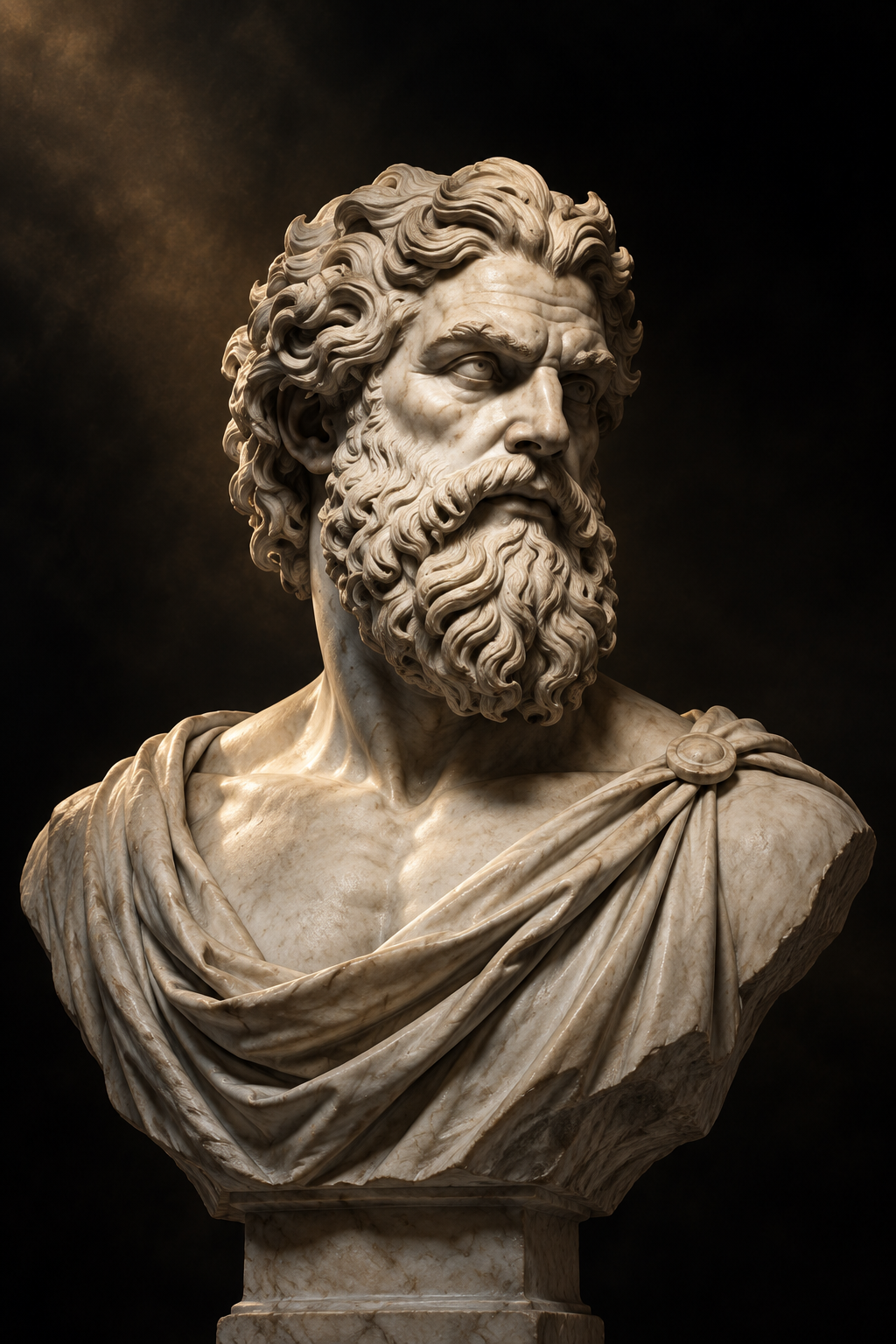
01 · The stories
Myths & defining acts
Trapped in Vulcan's golden net with Venus and exposed to the laughing gods; wounded by Diomedes at Troy and fled bellowing to Olympus; tried on the Areopagus for killing Poseidon's son; fathered Romulus and Remus, suckled by the she-wolf.
02 · Sacred lineage
Family & relations
Parents: Jupiter (Zeus) and Juno (Hera). Lover: Venus (Aphrodite). Offspring: Phobos and Deimos (Fear and Panic), Harmonia, Cupid; (Roman tradition) Romulus and Remus by the Vestal Rhea Silvia.
03 · Places of devotion
Abode & sacred sites
Warlike Thrace (Greek); the Campus Martius ('Field of Mars') and the Temple of Mars Ultor in the Forum of Augustus, Rome (Roman).
04 · Two traditions
Greek & Roman perspectives
Ares
Viewed with contempt and suspicion: Homer's Zeus calls him the most hateful of the gods. Ares is the personification of irrational slaughter, cowardly when hurt, with few temples outside Sparta and Thrace.
Mars
Honoured as the noble father of the Roman people and guardian of the frontiers and farms; second only to Jupiter. His priests the Salii danced through the city in March and October to open and close the war season; generals set out by shaking his sacred spears.
05 · Extensive analysis
A closer reading
This is the sharpest cultural divergence in classical mythology. To the Greeks, Ares was an uncivilised Thracian brute who whined when wounded and was despised by his own family. To the Romans, Mars was a revered ancestral patriarch: in his older form Mars Gradivus he drove blight from the crops and secured the boundaries, before becoming the supreme emblem of legionary dominance and, as Mars Ultor, of avenged honour. His month, March, opened both the year and the campaigning season.
06 · Sources
From the archive
Text from Gods · greek_roman_gods, row 7. Imported 10 September 2026.