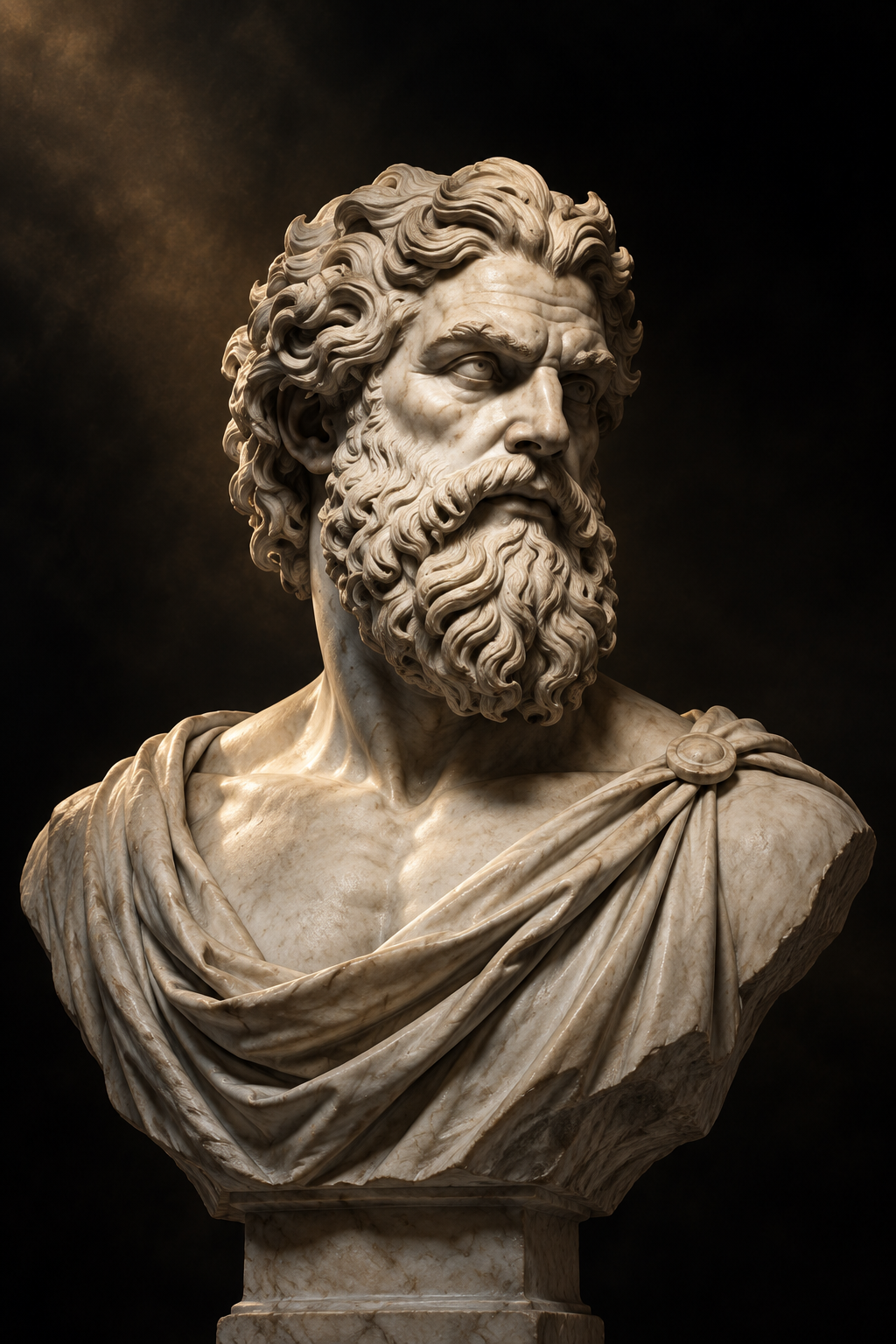
01 · The stories
Myths & defining acts
Born from the sea and blown ashore on a shell; won the golden apple in the Judgement of Paris by promising Helen to Paris; her affair with Mars exposed by Vulcan's net; her mortal lover Adonis killed by a boar and mourned yearly; protected Aeneas during the fall of Troy; let Psyche marry Cupid after cruel trials.
02 · Sacred lineage
Family & relations
Greek: born from the sea-foam around the severed genitals of Uranus; OR (Roman) daughter of Jupiter and Dione. Husband: Vulcan (Hephaestus). Lovers: Mars, Adonis, Anchises. Offspring: Aeneas, Cupid (Eros), Hermaphroditus, Priapus, Harmonia.
03 · Places of devotion
Abode & sacred sites
Mount Olympus; Cyprus (Paphos) and Cythera, where she came ashore (Greek); the Temple of Venus Genetrix in Caesar's Forum, Rome (Roman).
04 · Two traditions
Greek & Roman perspectives
Aphrodite
A potent and often destructive cosmic force of irresistible attraction that overwhelms gods and mortals alike and can trigger catastrophe such as the Trojan War; also, as Aphrodite Urania, a higher spiritual love.
Venus
Initially an obscure Italic goddess of gardens and cultivated fields. Elevated to paramount divine ancestress of the Roman nation through Aeneas, and claimed specifically by the Julian dynasty: Caesar built her temple, Augustus used Venus Genetrix to legitimise the principate.
05 · Extensive analysis
A closer reading
Aphrodite entered Greece via Cyprus from a Near Eastern archetype (Inanna / Ishtar), personifying uncontrollable sexual drive and creative force; in myth she is vain, easily slighted and casually destructive, yet the giver of life's sweetest pleasures. In Rome she moved from a minor garden-numen to a central ideological pillar of the state: because her son Aeneas founded the Roman line, Venus was literally the mother of the nation and the special protector of Caesar's family, which made her one of the most politically charged deities of the late Republic and Empire.
06 · Sources
From the archive
Text from Gods · greek_roman_gods, row 8. Imported 10 September 2026.