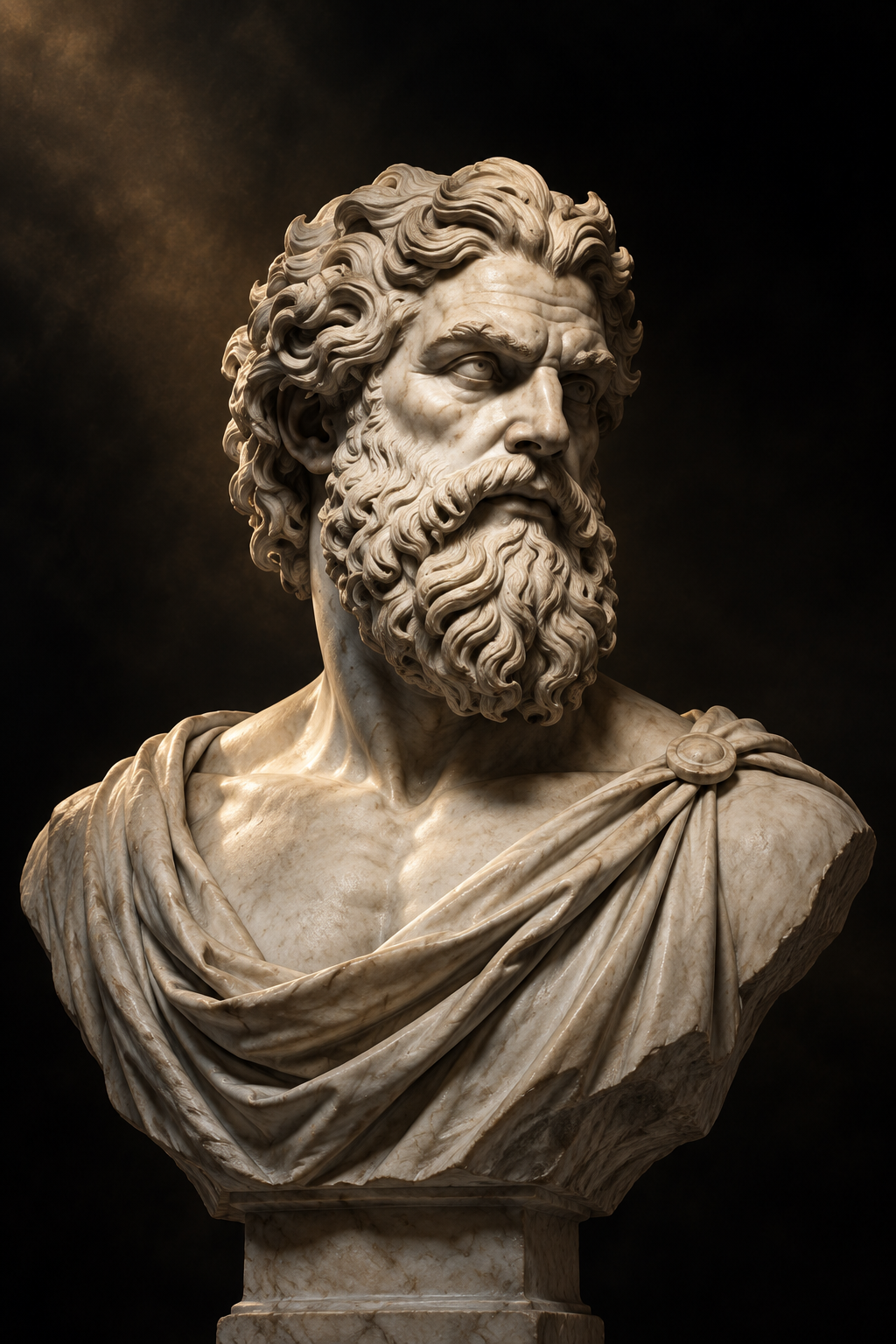
01 · The stories
Myths & defining acts
Fell in love with the shepherd Endymion and asked Zeus to grant him eternal, ageless sleep so that she could visit and kiss him undisturbed every night forever; loved also by Pan, who bribed her with a fleece.
02 · Sacred lineage
Family & relations
Parents: the Titans Hyperion and Theia. Siblings: Helios (Sun) and Eos (Dawn). Lover: Endymion. Children: fifty daughters (the Menae, the months) and, by Zeus, Pandia.
03 · Places of devotion
Abode & sacred sites
The night sky; Mount Latmus, where Endymion sleeps (Greek); a temple on the Aventine Hill, Rome (Roman).
04 · Two traditions
Greek & Roman perspectives
Selene
Drives a silver chariot pulled by white horses or oxen across the sky as her brother Helios completes his circuit; identified in love-magic and night rites, and sometimes merged with Artemis and Hecate.
Luna
Venerated as Luna, with an ancient Aventine temple (traditionally 6th century BCE); grouped with Diana and Proserpina in the triple goddess of heaven, earth and underworld, and paired with Sol as the celestial couple that orders the calendar.
05 · Extensive analysis
A closer reading
Selene / Luna governs the night sky with a cool, tranquil light, the counterpart to her brother the Sun: as he sets in the west she rises in the east. Her one real myth, the love for the sleeping Endymion, is an image of beauty preserved outside of time that drew classical lyric poets to themes of eternal perfection and solitary love. Like Helios she was gradually overshadowed, absorbed into the composite Diana-Luna-Hecate, though Rome kept a distinct cult of Luna as half of the sun-and-moon pair.
06 · Sources
From the archive
Text from Gods · greek_roman_gods, row 31. Imported 10 September 2026.