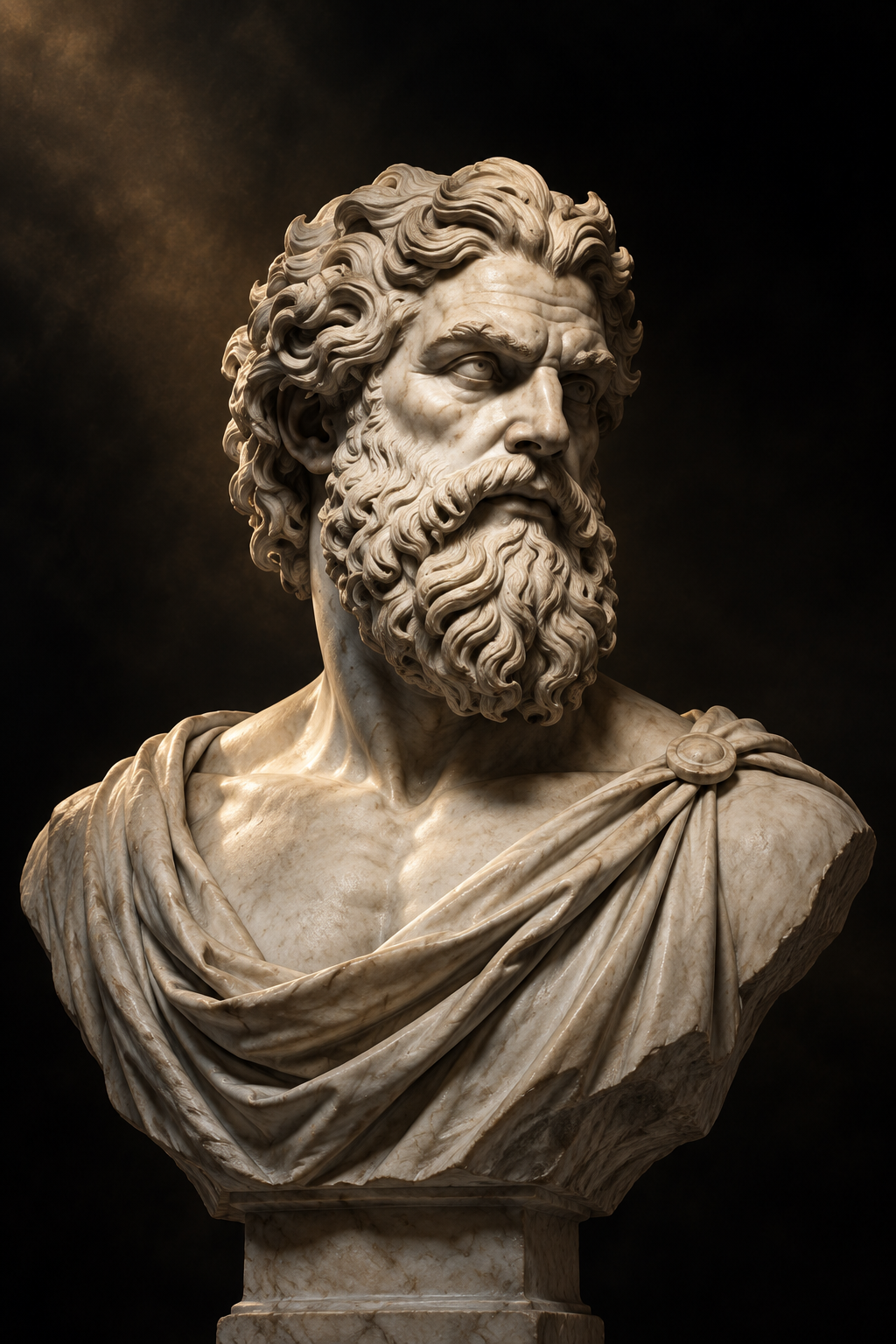
01 · The stories
Myths & defining acts
Formed the first humans from clay; tricked Zeus at Mekone into taking the bones-and-fat share of sacrifices, leaving the meat for people; when Zeus hid fire, stole it back in a hollow reed; Zeus then had him chained to a rock where an eagle ate his ever-regenerating liver daily, and sent Pandora to mankind as further punishment; freed at last by Heracles.
02 · Sacred lineage
Family & relations
Parents: the Titan Iapetus and the Oceanid Clymene (or Themis). Brothers: Atlas, Menoetius, Epimetheus ('Afterthought'). Son: Deucalion, survivor of the Flood.
03 · Places of devotion
Abode & sacred sites
Moved among gods and men before his punishment; then chained to a crag in the Caucasus at the edge of the world.
04 · Two traditions
Greek & Roman perspectives
Prometheus
Had a cult in Athens, sharing an altar with Hephaestus and Athena as a giver of crafts, with a torch-race in his honour; especially revered in the potters' quarter; treated by philosophers as the founder of civilisation.
(Prometheus)
Known mainly through Greek myth and Latin poetry (Ovid, Horace) as a symbol of human inventiveness and of overreaching ambition; not a Roman cult figure.
05 · Extensive analysis
A closer reading
Prometheus is the great rebel and culture-hero of Greek myth, a Titan who takes humanity's side against the gods and pays with one of mythology's most vivid punishments. He is credited with making people from clay and teaching them fire, writing, medicine, mathematics and every other art, and his name means 'forethought' - the intelligence that plans ahead and bends the world to human purposes, with the risk such defiance carries. Aeschylus made him a figure of heroic endurance against tyranny, and he has been reinterpreted ever since as a symbol of science, progress and revolt.
06 · Sources
From the archive
Text from Gods · greek_roman_gods, row 41. Imported 10 September 2026.