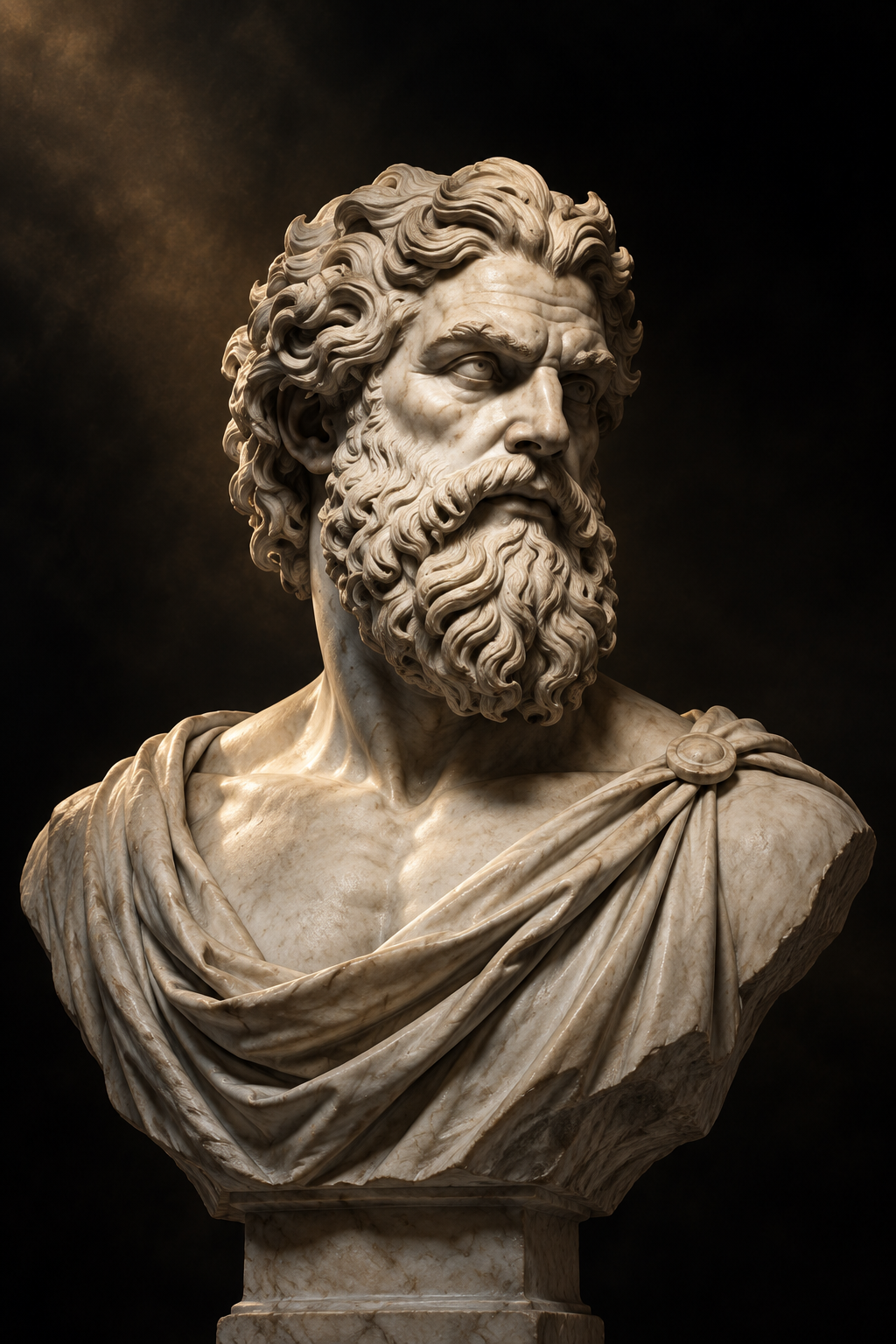
01 · The stories
Myths & defining acts
Born twice, from Semele and then from Zeus's thigh; driven mad by Hera and wandered as far as India; turned kidnapping pirates into dolphins; gave King Midas the golden touch; had King Pentheus of Thebes torn apart by his own mother in a bacchic frenzy; found and married the abandoned Ariadne; rescued his mother from the underworld.
02 · Sacred lineage
Family & relations
Parents: Jupiter (Zeus) and the mortal Semele (or Persephone). Carried to term in Zeus's thigh. Consort: Ariadne. Offspring: Oenopion, Thoas, Priapus (sometimes).
03 · Places of devotion
Abode & sacred sites
Mount Olympus (a latecomer to it); Mount Cithaeron, Thebes, Naxos and the East (Greek); the Aventine Hill, Rome (Roman).
04 · Two traditions
Greek & Roman perspectives
Dionysus
The twice-born wine-god whose rites let mortals transcend normal limits; Greek tragedy and comedy were born at his City Dionysia in Athens. His maenads danced in ecstatic trance in the mountains; mystery cults promised a blessed afterlife.
Bacchus (Liber Pater)
Assimilated with Liber Pater, an old Italic god of fertility and freedom whose Liberalia (17 March) was the day boys took the adult toga. In 186 BCE the Senate violently repressed the secret, nocturnal, cross-class Bacchanalia as a conspiracy against public order, by the Senatus Consultum de Bacchanalibus, and then tolerated it only in restricted form.
05 · Extensive analysis
A closer reading
Dionysus is the archetype of divine paradox: foreign yet native, giver of supreme joy through wine and instigator of frenzied self-destruction, whose rites dissolve social identity and hierarchy. Out of his Athenian festivals came drama itself. When his worship swept into Rome as the Bacchanalia, its clandestine nocturnal meetings across classes and sexes looked to the Senate like a threat to military discipline and the social order, prompting one of the harshest religious crackdowns in Roman history, even as the respectable civic Liber was kept on.
06 · Sources
From the archive
Text from Gods · greek_roman_gods, row 15. Imported 10 September 2026.