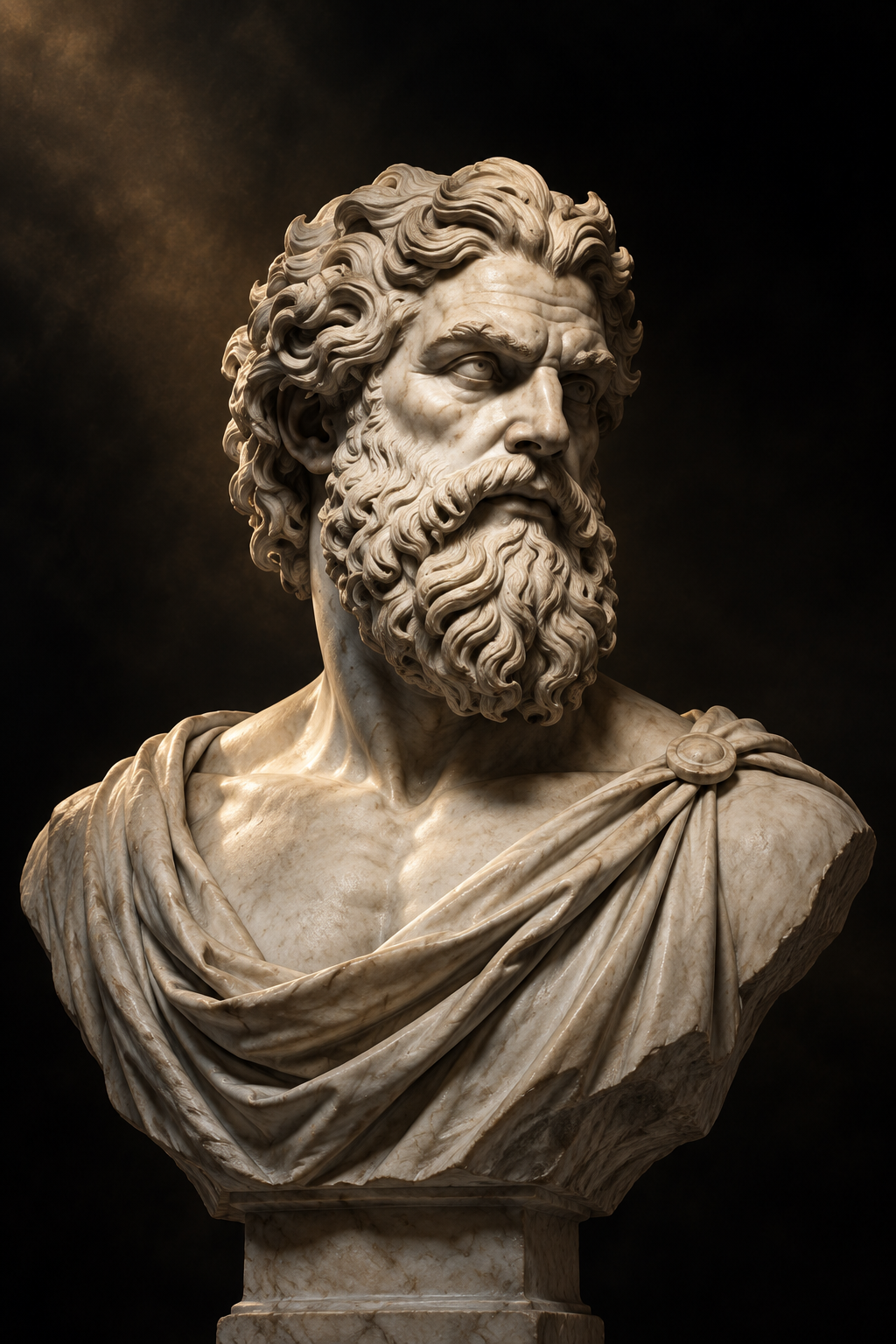
01 · The stories
Myths & defining acts
Withheld all growth when Hades seized Persephone, causing famine, until Zeus arranged that her daughter spend part of the year below and part above, creating the seasons; while searching she was kindly received at Eleusis, taught Triptolemus agriculture, and founded her Mysteries; punished Erysichthon with unending hunger for felling her grove.
02 · Sacred lineage
Family & relations
Parents: Saturn (Cronus) and Ops (Rhea). Offspring: Proserpina (Persephone) by Jupiter; Arion; Plutus (Wealth) by Iasion.
03 · Places of devotion
Abode & sacred sites
Mount Olympus; Eleusis, home of the Mysteries, and the fields of Sicily (Greek); the Temple of Ceres on the Aventine, holding the plebeian archives and treasury, Rome (Roman: the Aventine Triad of Ceres, Liber and Libera).
04 · Two traditions
Greek & Roman perspectives
Demeter
Central to the Eleusinian Mysteries, the most revered initiation cult of the Greek world, which promised initiates a blessed afterlife; also honoured at the women-only Thesmophoria. The mother who starved the earth until reunited with her daughter.
Ceres
A powerhouse of plebeian identity. Her temple was the plebs's political and record-keeping centre, and the Cerealia (mid-April, with games and foxes released bearing torches) celebrated agrarian security and the grain dole. To swear 'by Ceres' was a solemn plebeian oath.
05 · Extensive analysis
A closer reading
Demeter represents the agrarian revolution that made settled civilisation possible, bridging wild nature and human law. Her grief over Persephone is the Greek explanation of the farming year - the seed buried before it can rise - and lay at the heart of the Eleusinian Mysteries and their hope beyond the grave. In Rome, Ceres was thoroughly politicised as the patron of the plebeian class, defending its grain rations, economic survival and constitutional standing against the patricians.
06 · Sources
From the archive
Text from Gods · greek_roman_gods, row 14. Imported 10 September 2026.