01 · The stories
Myths & defining acts
Fell in love with the Athenian princess Orithyia and, when courtship failed, swept down and carried her off to Thrace; their sons the Boreads sailed with the Argonauts and drove off the Harpies; in Aesop's fable he competed with the Sun to strip a traveller of his cloak and lost, because force made the man wrap up tighter while warmth made him take it off.
02 · Sacred lineage
Family & relations
Parents: the Titan Astraeus (Stars) and Aurora (Eos, Dawn). Brothers: the other Winds - Zephyrus (west), Notus (south), Eurus (east). Wife: Orithyia. Sons: the winged Boreads Calais and Zetes.
03 · Places of devotion
Abode & sacred sites
A cave or palace in cold Thrace, north of Greece; Mount Haemus.
04 · Two traditions
Greek & Roman perspectives
Boreas
Had a genuine civic cult in Athens after being credited with wrecking Persian fleets off Cape Sepias in 480 BCE; the grateful Athenians built him a shrine by the river Ilissos; also honoured at Thurii.
Aquilo
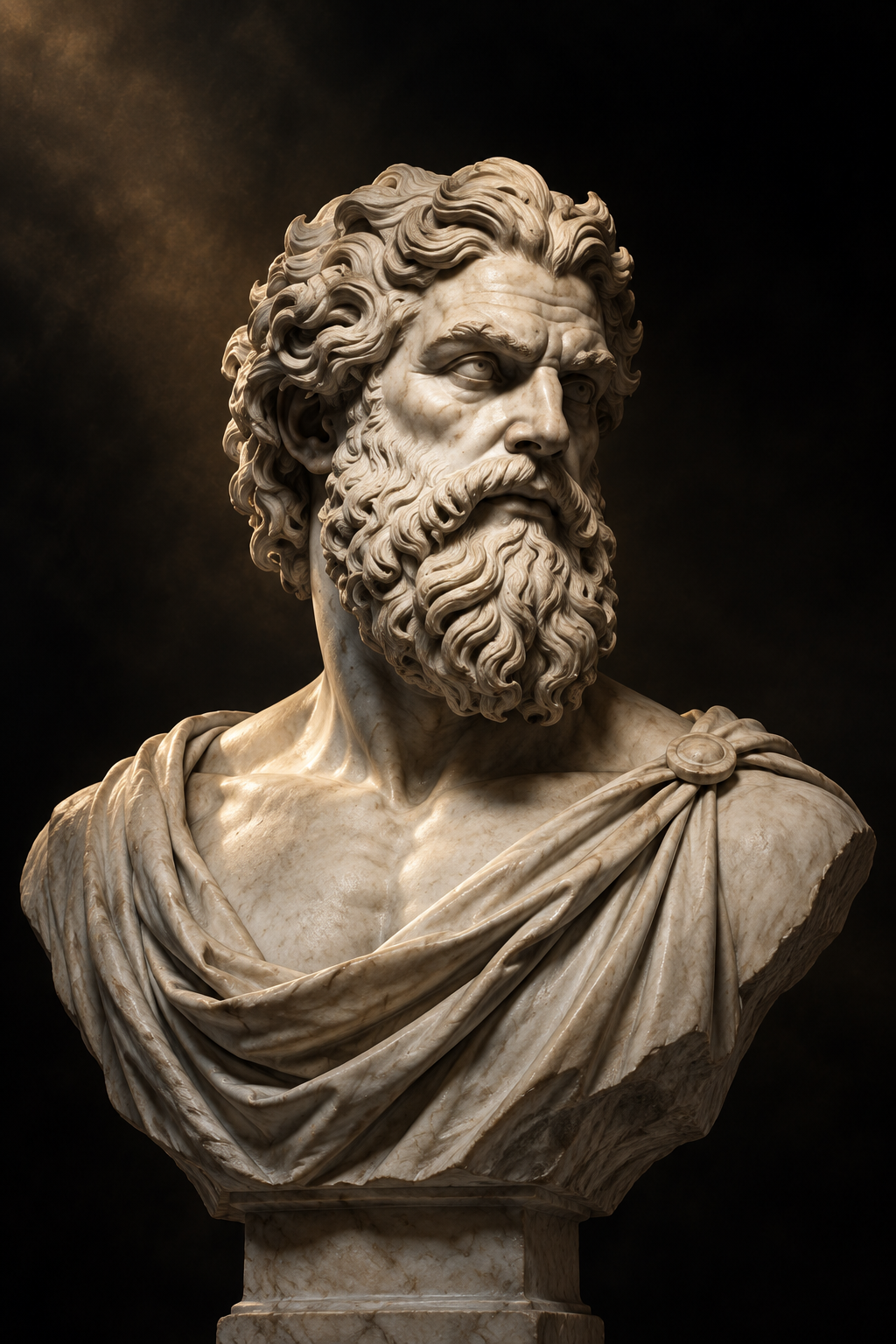
One of the four Venti of Roman weather-lore and poetry, shown as a strong, older winged man, heavily draped, with streaming hair and beard.
05 · Extensive analysis
A closer reading
Boreas is the most sharply characterised of the four wind-gods: the violent, freezing blast out of the north that brings winter storms, imagined as a powerful bearded figure with great wings who takes what he wants by force. Unusually for a wind he had a real civic cult in Athens, which believed he had twice destroyed hostile Persian fleets on its behalf. Aesop's fable of the wind and the sun, in which his brute strength is beaten by gentle warmth, made him a lasting emblem of the limits of force.
06 · Sources
From the archive
Text from Gods · greek_roman_gods, row 43. Imported 10 September 2026.