01 · The stories
Myths & defining acts
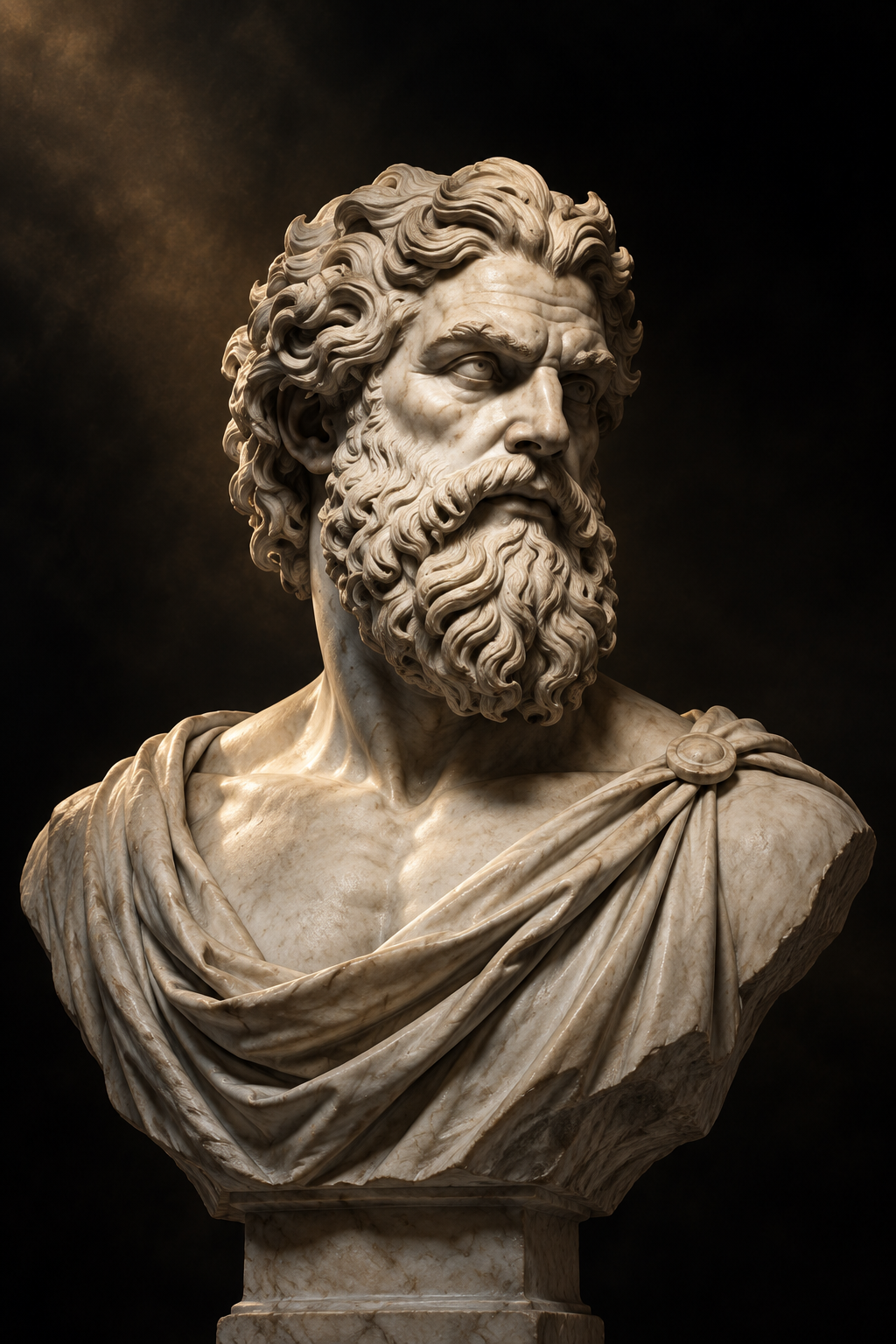
When Tarquin the Proud cleared the shrines on the Capitoline to build the great Temple of Jupiter, only Terminus's stone refused to move, so the architects had to enclose it within the temple, leaving an opening in the roof above it.
02 · Sacred lineage
Family & relations
An indigenous Roman deity with no parentage or children in classical myth.
03 · Places of devotion
Abode & sacred sites
The Capitoline Hill, where his sacred stone refused to yield to Jupiter; every marked farm boundary in Italy.
04 · Two traditions
Greek & Roman perspectives
Terminus
Greeks recognised Zeus Horios, 'Zeus of boundaries', but had no standalone boundary deity.
No direct Greek equivalent
Celebrated on 23 February at the Terminalia, when neighbouring landowners garlanded their shared boundary stones and made joint sacrifices to preserve peace; a boundary stone was itself a living deity, and moving one made the offender sacer (accursed).
05 · Extensive analysis
A closer reading
Terminus exemplifies the hyper-legalistic character of Roman religion, in which a boundary stone is not masonry but a god whose desecration brings absolute condemnation. That Terminus stubbornly refused to give way even to Jupiter on the Capitoline was read as an omen that Roman borders would never retreat, and his annual festival, in which neighbours jointly honoured the marker between their fields, turned the potential for property disputes into a shared act of worship.
06 · Sources
From the archive
Text from Gods · greek_roman_gods, row 50. Imported 10 September 2026.