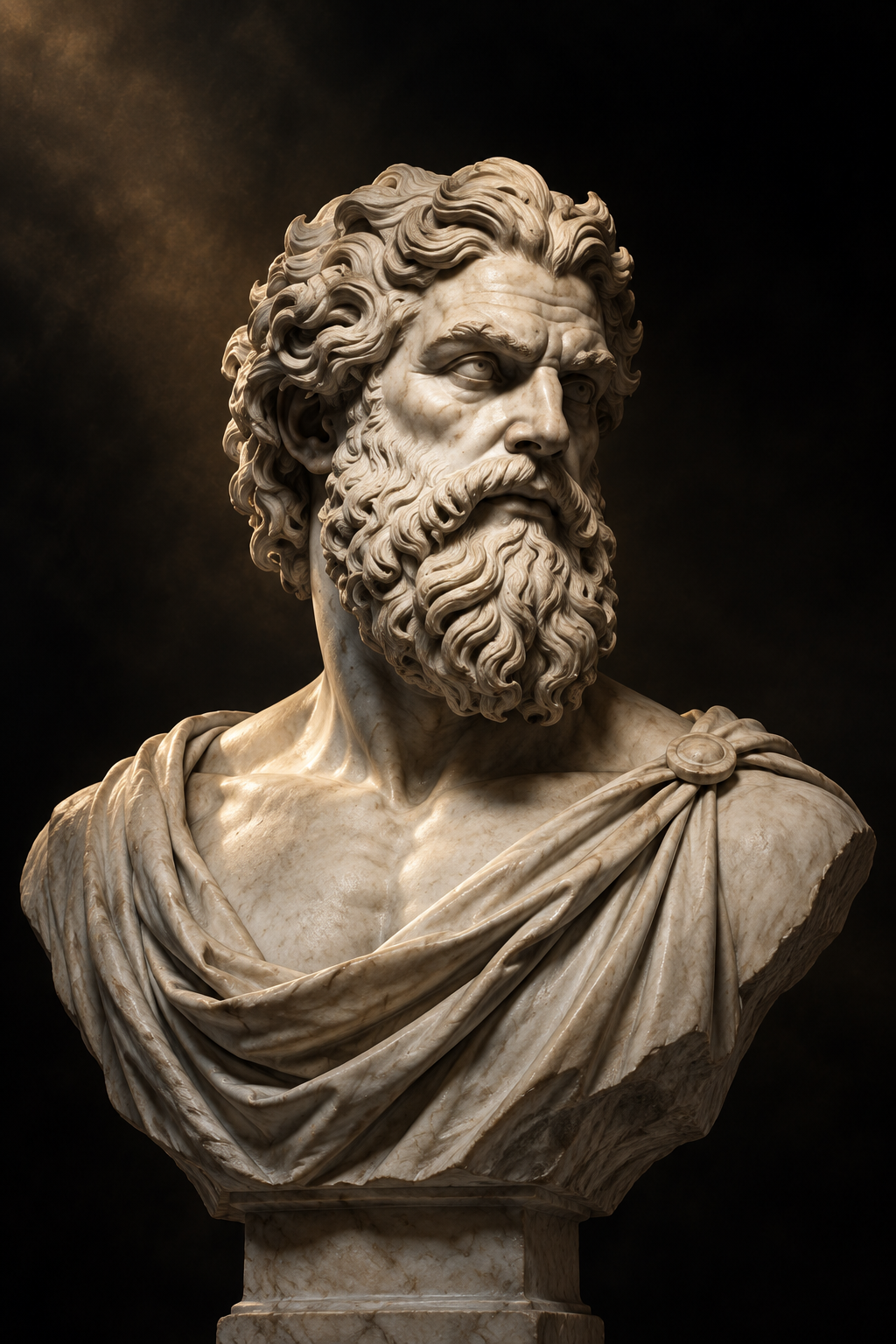
01 · The stories
Myths & defining acts
Thrown from Olympus and left lame; took revenge with a golden throne that trapped Hera until Dionysus brought him back with wine; caught Venus and Mars in an invisible net; forged the armour of Achilles, the sceptre of Agamemnon, the thunderbolts of Zeus, Pandora, and the bronze giant Talos; chained Prometheus to the Caucasus.
02 · Sacred lineage
Family & relations
Parents: Juno (Hera) alone, in revenge for Athena's birth, or Jupiter and Juno. Consort: Venus (Aphrodite), or the Grace Aglaia. Lame from birth.
03 · Places of devotion
Abode & sacred sites
Mount Olympus; the island of Lemnos, where he fell; workshops beneath Mount Etna and the Aeolian island of Vulcano; the open-air Volcanal at the foot of the Capitol, Rome.
04 · Two traditions
Greek & Roman perspectives
Hephaestus
The only physically imperfect Olympian, cast from heaven and lamed, viewed with a mix of amusement and deep respect for a creative genius on whom all the other gods depend for palaces, weapons and treasures.
Vulcan (Vulcanus / Mulciber)
Feared as the volatile power of consuming fire in a crowded wooden city. His Volcanal stood outside the old boundary to keep fire away; at the Vulcanalia (23 August), the height of the drought, people threw live fish and small animals into bonfires as substitutes for themselves.
05 · Extensive analysis
A closer reading
Hephaestus is the only Olympian who works and the only one who is imperfect: soot-covered, crippled and mocked, yet indispensable, embodying the intelligence of the hand rather than the sword. His marriage to the most beautiful goddess is a running image of the mismatch between the artisan and the world he serves. Rome cared less about the craftsman and more about the fire itself: the Vulcanalia was a grim summer rite to buy off the flames that could level a district of tenements overnight.
06 · Sources
From the archive
Text from Gods · greek_roman_gods, row 11. Imported 10 September 2026.