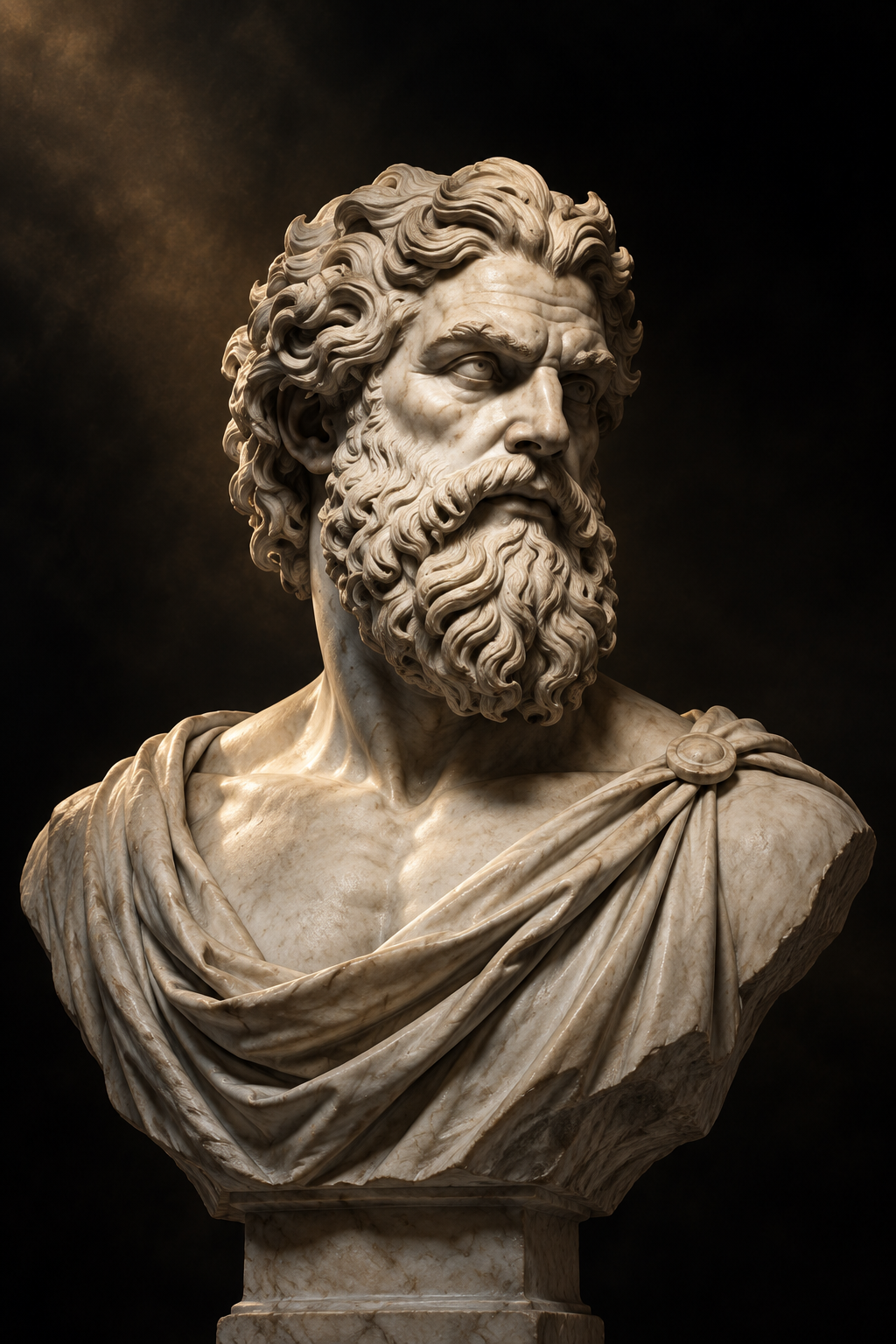
01 · The stories
Myths & defining acts
Uninvited to the wedding of Peleus and Thetis, she threw among the guests a golden apple inscribed 'to the fairest', setting Juno, Minerva and Venus against one another; the resulting Judgement of Paris led directly to the Trojan War. In the Iliad she starts small and grows until her head brushes heaven as she walks among dying soldiers.
02 · Sacred lineage
Family & relations
Daughter of Nox (Nyx, Night), sometimes with no father; companion of Ares / Mars. Sister of the Fates, Nemesis and the other children of Night.
03 · Places of devotion
Abode & sacred sites
The underworld and the battlefields; the edges of Olympus.
04 · Two traditions
Greek & Roman perspectives
Eris
Feared as an instigator of destructive war; Hesiod distinguished two Erises, a ruinous one and a productive one that makes even the lazy man take up the plough when he sees his neighbour prosper.
Discordia
Personified as Discordia, a figure of civic breakdown and factional bloodshed, especially resonant during the Roman civil wars; Virgil sets her stalking the battlefield with her cloak torn.
05 · Extensive analysis
A closer reading
Eris and Discordia dramatise the fragility of social bonds, human and divine. The image of her swelling from a spark to a giant striding through the ranks of the dying captures how minor resentments escalate into catastrophic war. Hesiod's split of strife into a destructive and a constructive form was an early attempt to think about competition itself: the same impulse that breeds feuds also drives industry and achievement.
06 · Sources
From the archive
Text from Gods · greek_roman_gods, row 24. Imported 10 September 2026.