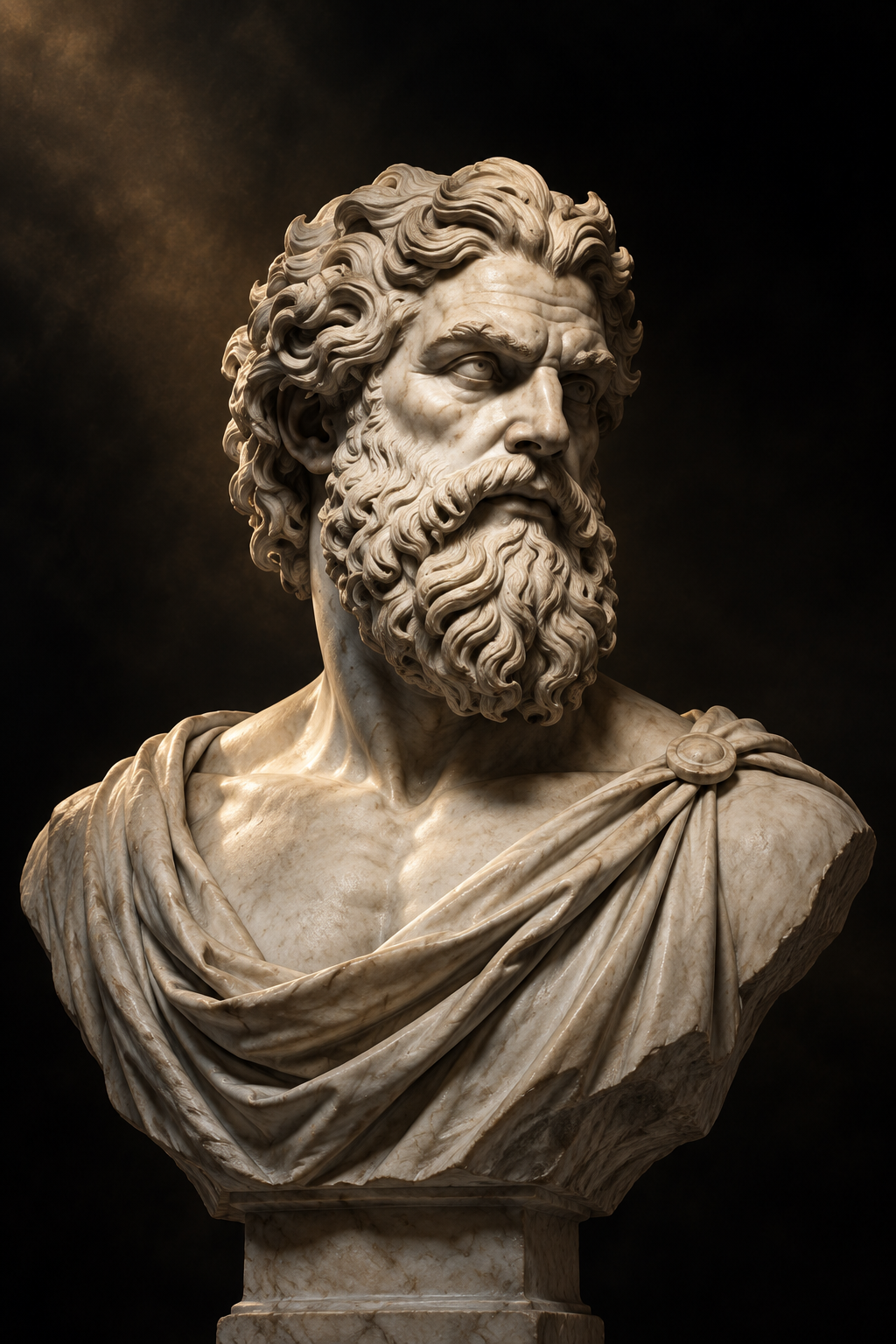
01 · The stories
Myths & defining acts
Entertained Odysseus for a month and sent him off with all the contrary winds tied in a leather bag; within sight of Ithaca the crew opened the bag thinking it held gold, and the released winds blew them all the way back; Aeolus then refused further help, seeing the crew as cursed.
02 · Sacred lineage
Family & relations
A son of Poseidon, or of Hippotes; father of six sons and six daughters who married one another. Not to be confused with two other mythological Aeoluses.
03 · Places of devotion
Abode & sacred sites
The floating Aeolian island, a bronze-walled isle in the far western sea, identified with the Lipari / Aeolian islands north of Sicily.
04 · Two traditions
Greek & Roman perspectives
Aeolus (Aiolos)
In Homer's Odyssey a hospitable king whom the gods have made warden of the winds; treated as semi-divine, holding delegated power rather than ruling in his own right.
Aeolus
Prominent in Roman epic: in Virgil's Aeneid, Juno bribes Aeolus with the nymph Deiopea to loose a storm that wrecks Aeneas's fleet, until Neptune angrily calms the sea and rebukes the winds for acting without his order.
05 · Extensive analysis
A closer reading
Aeolus is the cosmic equivalent of a prison warden: the winds are dangerous forces that must be kept locked away, and he is the figure the gods have put in charge of the lock. He does not own the winds or command the weather himself, which is why Neptune is furious when Aeolus releases a storm at Juno's private request. His two great scenes, both in epic, turn on the bag or cave of winds being opened at the wrong moment, with disastrous results - a neat image of what happens when destructive natural forces are let loose without control.
06 · Sources
From the archive
Text from Gods · greek_roman_gods, row 45. Imported 10 September 2026.